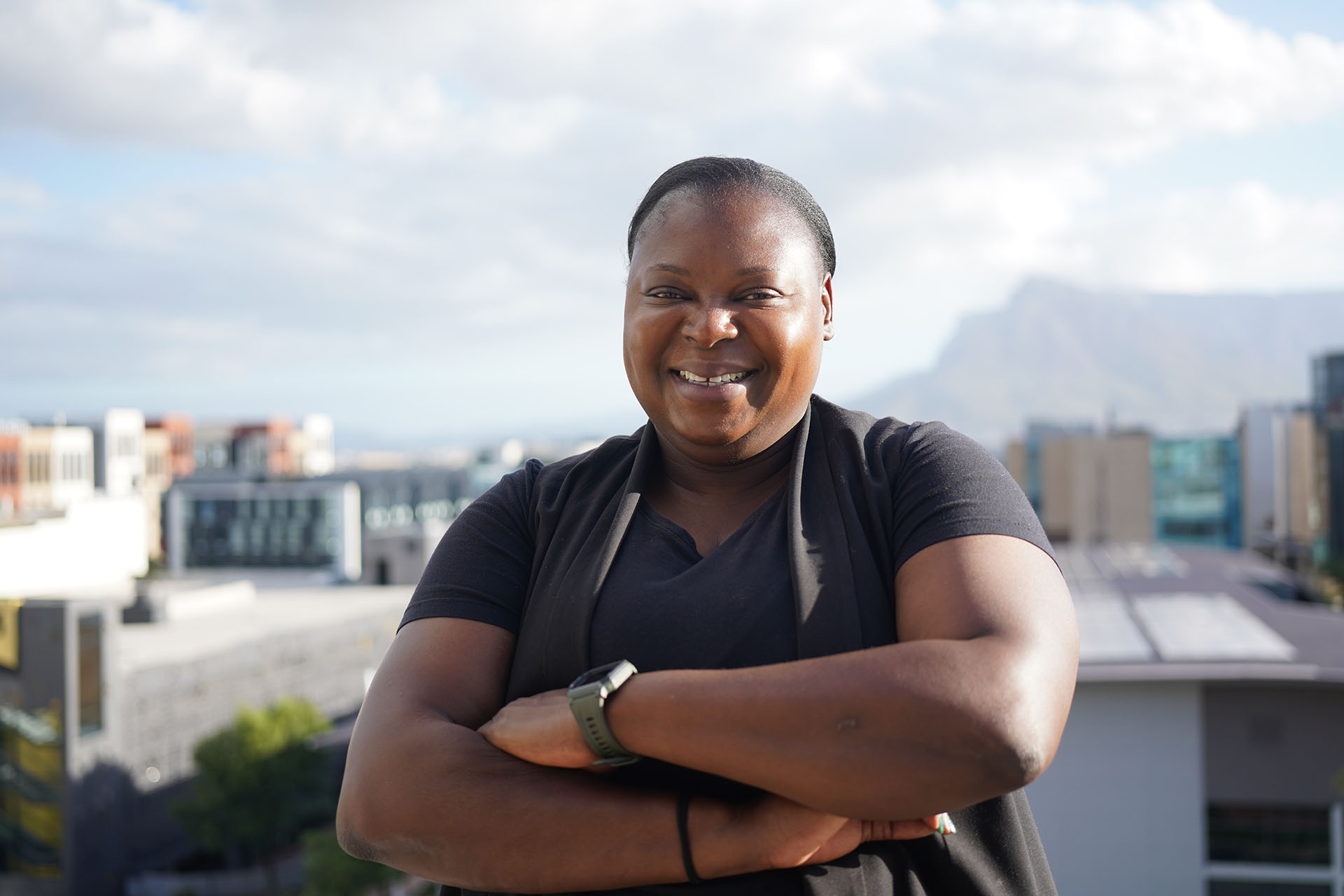
To wrap up Women’s Month, Telly Chauke reflects on her 20-year career journey – from grassroots researcher to Petco CEO – and shares her learnings with women interested in or working in the sustainability sector.
A: This is a momentous time for me to reflect on my career to date, because 2026 marks twenty full years of my journey in the formal world of work. It is difficult to isolate one defining moment, or even one “biggest” lesson, because almost every achievement, challenge and even the moments that may have seemed unremarkable at the time have shaped how I show up today.
When I look back, the most defining moments have come during periods of transition: moving from one role to another, stepping into unfamiliar environments, and learning how to hold steady while everything around me was changing. Through each transition, the common thread has been my commitment to servant leadership and to shared gains. I have always believed that leadership is not only about personal progression, but about serving the organisation, its people and the wider community.
Public sector: In 2006, I moved from an entry-level research role in the non-governmental and community-based water and rural livelihoods sector into a mid-level role in a government department. That move marked the beginning of eighteen years in public service. I had spent nearly two years working close to the grassroots, on projects that made the connection between people, biodiversity and water very real for me. Moving from that space into a highly regulated environment was jarring. Learning to operate within government planning, budgeting and reporting cycles felt lonely at first.
Over time, and through my progression in the public sector right up to an executive role in a state entity, I learned how to innovate within boundaries. I also learned the value of relationships – with colleagues, stakeholders and mentors who helped shape my journey. “Learning and growing at every turn” became something of a mantra for me. But through every change, what I held on to most was the desire to serve with integrity and to make a meaningful contribution.
NGO space: In 2024, I shifted spaces once again, moving back into the non-profit and non-governmental sector through Petco. This transition brought its own complexity, because Petco operates within a strong corporate dynamic shaped by its membership base. The FMCG, packaging and recycling industries are robust, volatile and demanding – a perfect storm of pressure, expectation and opportunity.
The big lesson I have learned here is that many people may share the same goal, but they often have different ways of getting there. My contribution is therefore not only to Petco, but also to the journeys of the people and organisations around us. That can be a difficult and testing environment to navigate. A career path that moves from grassroots work to executive and corporate spaces does not, on its own, guarantee success.
Ultimately, the lesson for me is that hard change is inevitable. What makes it possible to move through change is remaining grounded, showing up genuinely, and keeping one’s focus on the shared goal and the shared gains. That is what has carried me through the defining moments of my career.
A: Women, especially those of colour like me, in any sector and any industry are still running an unbalanced race. The opportunity, however, is that this industry is changing, and we are at a point where sustainability, circularity, innovation and social impact are no longer side conversations. They are becoming central to how businesses remain relevant and responsible.
For women, the biggest opportunity lies in helping to shape that transition from the inside. South Africa’s circular economy is creating space for new thinking in packaging design, collection systems, recycling infrastructure and networks, enterprise development and waste picker integration. Women are already active in many of these parts of the value chain, often bringing practical experience, community connection and resilience to the work.
What excites me most is that this opportunity is not only about representation in boardrooms, although that matters deeply. It is also about women influencing the design of systems: how products are made, how materials are recovered, how informal work is recognised, how communities benefit, and how industry growth can be shared more fairly.
The opportunity is for women to lead not as exceptions, but as essential contributors to the future of the sector. If the industry is serious about circularity, it must also be serious about inclusion.
A: The industry needs to move beyond good intentions and create visible, practical pathways for women. Encouragement is important, but support must be structured. That means mentorship, sponsorship, exposure to decision-making spaces, access to technical training, and deliberate succession planning.
We also need to be honest about the culture of our workplaces. Women should not have to spend their energy proving that they belong before they can contribute. Leadership and technical roles must be made accessible through fair recruitment, inclusive development opportunities and environments where different leadership styles are valued.
Another important step is visibility. Young women need to see women engineers, plant managers, recycling entrepreneurs, sustainability specialists, CEOs and board members in this industry. When those stories are visible, they expand the imagination of what is possible.
Finally, the industry must support women at different stages of life and career. Talent is not only built in the early years; it is built through continued investment, flexibility, trust and opportunity.
A: I would tell her that this is an industry with more possibilities than many people realise. It touches almost every part of daily life: food, health, retail, logistics, manufacturing, recycling, design, policy and sustainability. If you are curious, willing to learn and open to complexity, there is space for you.
I would also tell her not to wait until she feels completely ready, and not to wait for either invitation or acceptance. Many of us have grown by entering spaces that were unfamiliar and sometimes uncomfortable. Ask questions. Find mentors. Build relationships. Learn the technical language of the industry, but do not lose your own voice in the process.
Most importantly, stay grounded in purpose. Your career can be commercial, technical and strategic, but it can also be deeply connected to people and the planet. Bring your full self to the work. Your perspective, your lived experience and your way of leading are not things to minimise – they may be exactly what this industry needs.
Other Petco news